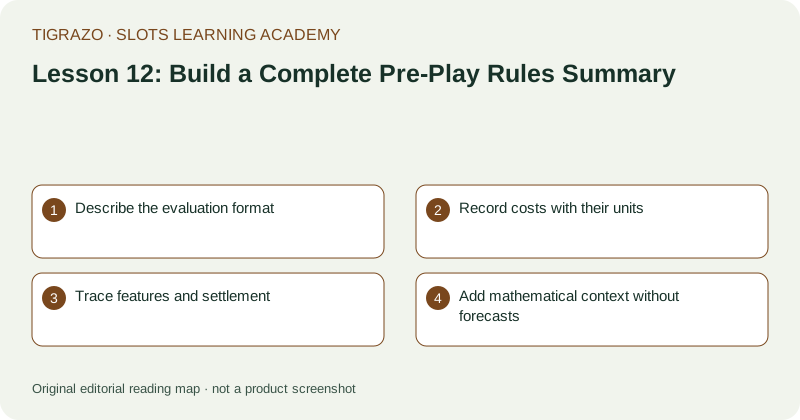
Describe the evaluation format
Begin with the layout and award mechanism: paylines, ways, clusters or another documented format. Record direction, minimum qualifying matches and eligible positions. Add wild substitutions, scatter roles and any exceptions that change an ordinary match. Keep this section operational: a reader should be able to identify a qualifying pattern from your description. Theme, animation and promotional adjectives can be omitted unless they communicate an actual rule. If you cannot explain the evaluation without pointing vaguely at the screen, revisit the information panel.
Record costs with their units
Write the selected total stake and any relationship to line stakes or coin values. Identify whether paytable entries are currency amounts or multiples. Note additional priced modes separately, including their confirmation boundary. For a hypothetical ten-times-total-stake example at 0.20, write payout 2.00 and label the example hypothetical. Do not place an illustrative calculation beside a real configuration without that distinction. A summary should make it difficult to mistake an example, maximum or optional purchase price for the ordinary amount committed per spin.
Trace features and settlement
For each feature, summarise the trigger, initial state, important changes, retriggers and ending condition. Include applicable award caps and explain whether multiple awards combine. Record what resets between rounds and what persists during a feature. Where the rules describe interrupted rounds or recovery information, note where the recorded result can be checked. A spinning animation, balance display and settled round history may describe different moments. The summary should preserve that distinction instead of treating every temporary screen state as a final financial result.
Add mathematical context without forecasts
Record RTP only with its applicable configuration and its long-run meaning. Keep hit frequency and volatility in separate fields, including their definitions if available. Unknown values should stay unknown. Do not fill gaps with theme-based guesses, recent outcomes or another version's figures. One brief note is enough to establish that RTP is not a session promise and independent spins are not due after losses. Your rules summary should explain information, not rank a game as profitable or convert its features into a reason to play.
Perform the final knowledge check
Ask a second reader, or your future self, five questions: what is paid, what qualifies, how is the award calculated, what changes during a feature and what limits apply? Every answer should point to a clear entry. Then mark unresolved conditions and remove unsupported claims. The completed document may conclude that the available explanation is insufficient; that is a valid result. Success means producing a reliable map of known rules and remaining questions, not finding a justification for a paid action.